Oma’s Knackwurst & Sauerkraut Skillet
This Knackwurst and Sauerkraut skillet is a one-pan meal that brings together smoky sausage, tender potatoes, tart apples, and plenty of sauerkraut that cooks right in the juices. It’s rustic, hearty, and perfect for cool nights or whenever you’re craving a German-style comfort dish.

This post may contain affiliate link(s). As an Amazon Associate, I earn from qualifying purchases. See Disclosures.
I grew up around German-inspired meals, so this always feels familiar and homey to me. Knackwurst are plump, juicy sausages that snap when you bite into them, kind of like an oversized hot dog but with a deeper, smokier flavor. They can be tricky to find, but a European deli is often the best bet.

You'll get ad-free recipes like:
Spaghetti Casserole,
Sloppy Joe Casserole,
Cowboy Casserole,
and more!

31 of Chef Jenn's FAVE Casseroles
I've gathered 31 of my favorite casseroles for you and your family to love, all in a convenient ebook with no ads and no AI! Each of these scratch-made dishes is created, tested, and loved by Chef Jenn. Get your instant download now!
This is a digital product. You'll receive an instant download link after purchase.
This skillet is easy enough for a weeknight but still special enough for Oktoberfest celebrations. Serve it with a cold beer and thick slices of rye bread, and you’ve got a meal that never disappoints.

History
Knackwurst & Sauerkraut is a hearty, old-world style dish with roots in German cuisine, dating back to the 19th century, making it a pre-1920s classic. Knackwurst, a plump German sausage that originated in northern Germany in the 1800s, is traditionally made with ground pork, beef, and garlic, and gets its name from the “crack” (knack) sound it makes when bitten. Pairing it with sauerkraut, a staple of German cooking since the 1600s, created a flavorful, filling meal that was both affordable and nourishing. German immigrants brought the tradition to the United States in the late 19th and early 20th centuries, where skillet versions like Oma’s became popular in home kitchens from the 1920s to 1950s for their simplicity and rich, comforting taste.
Ingredients
- Panko breadcrumbs – A light sprinkle of panko mixed with butter bakes into a golden crust that gives the skillet its signature crunch.
- Butter – Some of the butter is for coating the breadcrumbs, while the rest goes into the skillet to help soften the onions and build flavor.
- Knackwurst sausages – Plump and smoky, these sausages are the star of the dish. They crisp beautifully in the pan before finishing in the oven.
- Cooking oil – A splash of neutral oil helps the sausages brown evenly without sticking to the skillet.
- Yellow onion – A basic cooking onion is all you need. It softens and sweetens as it cooks and adds a rich base to the sauce.
- All-purpose flour – This gets stirred into the onions to form a quick roux, which thickens the sauce into something silky and flavorful.
- Chicken broth – I usually choose a low-sodium broth so the seasoning is easier to control, but any good chicken broth will do.
- Granny Smith apple – A tart apple works wonders here, balancing the richness of the sausage and sauerkraut with a bit of brightness.
- Yukon Gold potatoes – These potatoes hold their shape well while still turning tender and creamy after baking.
- Sauerkraut – Drain it well so the dish doesn’t get soggy. If you like a milder flavor, rinse it, but if you prefer a sharper tang, leave it as-is.
- Brown sugar – Just a touch softens the vinegar bite of the sauerkraut. I sometimes skip it, but it’s nice if you prefer a sweeter balance.
- Fresh parsley – A quick sprinkle before serving adds a fresh pop of color and brightens the whole skillet.
- Whole-grain mustard – Mixed with sour cream, this makes an easy, tangy sauce to serve alongside the sausages.
- Sour cream – Stirred with mustard, it adds creaminess and rounds out the sharp flavors of the sauerkraut.

How To Make Knackwurst & Sauerkraut Skillet
Scroll down for the full recipe card with exact measurements and printable instructions.
Start by preheating your oven to 400°F and setting the rack in the lower third. In a microwave-safe bowl, melt a tablespoon of butter, then stir in the breadcrumbs until they’re evenly coated. I like doing this in the microwave because it’s fast, and the butter mixes right in without needing another pan. Set aside while you prepare the rest of the dish.
Heat a 12-inch cast-iron skillet with a little oil and sear the knackwurst for 2–3 minutes per side until they take on a golden crust. Cast iron works perfectly here because it holds a steady heat and gives the sausages that classic snap without overcooking them. Once they’re browned, remove the sausages to a plate.

In the same pan, melt the remaining butter and toss in the onions with a sprinkle of salt. Stir them with a heat-safe silicone spatula—I love using it because it flexes against the skillet, scooping up every bit of flavor from the bottom while keeping the pan scratch-free. Cook until the onions are softened and lightly caramelized, about 5 minutes.
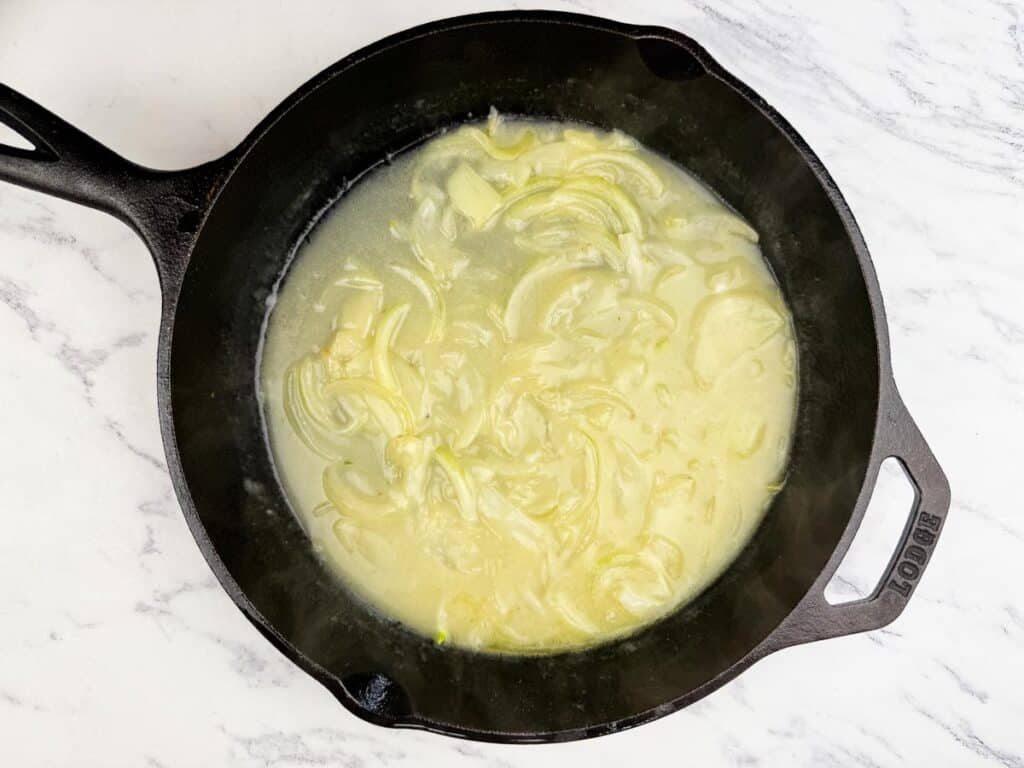
Dust the onions with flour, stirring to coat, then slowly pour in the broth while whisking with a balloon whisk. This tool is perfect for blending liquids into a roux since its wide wires sweep the pan clean and keep the sauce silky. Let the mixture simmer for a minute or two until slightly thickened.
Now add the sliced potatoes, apple wedges, sauerkraut, and a pinch of brown sugar if using. Give everything a good stir so the flavors mix, then nestle the sausages back on top. Cover the skillet tightly with foil—heavy-duty foil is my choice because it locks in steam and prevents moisture from escaping—and bake for 25–35 minutes, or until the potatoes are tender.


When the potatoes are ready, take off the foil, sprinkle the buttered breadcrumbs evenly across the top, and slide the skillet under the broiler for 2–3 minutes until golden and crisp. Let it rest for 5 minutes, then finish with a sprinkle of fresh parsley.
For serving, stir the mustard and sour cream together in a small prep bowl. I like using one with a spout so it doubles as a dipping bowl and makes drizzling neat and easy at the table.

Chef Jenn’s Tips
- A braiser works just as well as cast iron since you can sear and bake in the same pan.
- Rinse and squeeze the sauerkraut if you prefer a softer, less briny flavor.
- For a deeper, richer flavor, let the onions caramelize longer before adding the flour.
Make It A Meal
This dish is filling on its own but pairs beautifully with a crisp salad and warm, crusty bread. I also love a side of bright green sauteed broccoli or another green veg. For a German-inspired spread, add spaetzle or soft pretzels with mustard. Dessert could be as simple as apple crisp or a rustic tart to keep the homestyle theme.

Storage
Leftovers keep in the fridge for up to 3 days in an airtight container. Reheat in the oven at 350°F or in short bursts in the microwave. The dish also freezes well; wrap it tightly and store for up to 2 months, then thaw in the fridge overnight before reheating.

Oma’s Knackwurst & Sauerkraut Skillet
Ingredients
- ¼ cup panko breadcrumbs
- 4 tablespoons butter divided
- 4-5 knackwurst German sausages – about 1 pound, cut into thirds
- 1 tablespoon cooking oil
- 1 medium yellow onion sliced
- 2 tablespoons all purpose flour
- 1 cup chicken broth
- 1 Granny Smith apple cored and sliced into wedges
- 2 Yukon Gold potatoes scrubbed and cut into ½-inch slices
- 2 cups sauerkraut drained and rinsed and squeezed dry
- 2 teaspoons brown sugar
- ¼ oz fresh parsley
- 1 tablespoon whole-grain mustard
- ¼ cup cream
Instructions
- Preheat oven to 400°F. Melt 1 tbsp butter in a small bowl, stir in panko, and set aside.
- Heat oil in a cast-iron skillet. Sear sausages for 2–3 minutes per side, then remove to a plate.
- Melt remaining butter in the skillet. Add onion and cook until softened.
- Stir in flour, then slowly whisk in broth until smooth. Simmer briefly.
- Add potatoes, apple, sauerkraut, and brown sugar if using. Stir and nestle sausages on top.
- Cover tightly with foil and bake 25–35 minutes until potatoes are tender.
- Remove foil, top with buttery breadcrumbs, and broil for 2–3 minutes until golden.
- Let rest for 5 minutes, garnish with parsley, and serve with mustard-sour cream sauce.
Video
Notes
Chef Jenn’s Tips
- A braiser works just as well as cast iron since you can sear and bake in the same pan.
- Rinse and squeeze the sauerkraut if you prefer a softer, less briny flavor.
- For a deeper, richer flavor, let the onions caramelize longer before adding the flour.
Nutrition
A Note on Nutritional Information
Nutritional information for this recipe is provided as a courtesy and is calculated based on available online ingredient information. It is only an approximate value. The accuracy of the nutritional information for any recipe on this site cannot be guaranteed.