Classic Caponata
Classic Caponata is a simple mix of eggplant, tomatoes, capers, and olives that turns into a flavorful, sweet and tangy veggie stew. It’s great for spreading on toasted bread or serving with grilled meats. This dish is a summer favorite, especially with fresh vegetables, but it tastes amazing any time of the year when you want something tasty.

This post may contain affiliate link(s). As an Amazon Associate, I earn from qualifying purchases. See Disclosures.
Caponata is a classic Italian dish, and while there are tons of ways to make it, this version is my favorite. It’s full of vegetables, has a bold garlic taste, and a bit of sweetness from fresh tomatoes.

You'll get ad-free recipes like:
Spaghetti Casserole,
Sloppy Joe Casserole,
Cowboy Casserole,
and more!

31 of Chef Jenn's FAVE Casseroles
I've gathered 31 of my favorite casseroles for you and your family to love, all in a convenient ebook with no ads and no AI! Each of these scratch-made dishes is created, tested, and loved by Chef Jenn. Get your instant download now!
This is a digital product. You'll receive an instant download link after purchase.
Whether you’re making a simple dinner, packing a picnic, or putting together a fancy appetizer board (just add a bowl of this to a charcuterie board and everyone will love it!), this recipe always turns out great. It’s also a perfect way to use fresh summer veggies, especially when tomatoes and eggplants are in season.

History
Caponata, a traditional Sicilian dish, dates back to the 18th century, making it a pre-1920s classic. Originally a sweet-and-sour eggplant relish cooked with tomatoes, capers, olives, and vinegar, it was typically served as a main course with bread or as a side dish. The “summery” version of Caponata highlights peak-season produce like tomatoes, eggplant, and fresh herbs, reflecting the dish’s Mediterranean roots. In the United States, caponata gained popularity during the mid-20th century, particularly in Italian-American communities, as home cooks embraced rustic, vegetable-forward recipes inspired by their heritage.
Ingredients
- Eggplant – You’ll need about 4 cups, diced, and no need to peel the skin off.
- Salt – This is for sweating the eggplant, which helps remove extra water. Don’t worry, it won’t make the dish too salty.
- Olive oil – Any type of olive oil will work fine here.
- Red onion – Regular cooking onions are also okay to use, but avoid sweet onions—they might make the dish too sweet.
- Celery stalks -You can include the celery leaves too; they add a lot of flavor.
- Red bell pepper – Yellow or orange bell peppers work just as well. The color doesn’t change the taste much.
- Garlic cloves -Fresh garlic is important! It gives a strong flavor that really boosts the veggies. Garlic from a jar just isn’t the same.
- Ripe tomatoes – Any kind of tomato is fine. Just cut them in half and gently squeeze out the seeds to get rid of extra liquid.
- Capers – Don’t skip these! They’re key to the flavor. If you like olives, you’ll enjoy capers too.
- Pitted green olives – Roughly chop them. You can also use black olives—I’ve tried both and they taste great.
- Red wine vinegar
- Sugar – This is optional; you can leave it out if you prefer.
- Salt and freshly ground black pepper – Season to taste.
- Fresh basil or parsley – Use these for a fresh, colorful garnish.

How To Make Classic Caponata
Scroll down for the full recipe card with exact measurements and printable instructions.
Start by sprinkling the diced eggplant with salt and letting it sit in a colander for 30 minutes. This draws out extra moisture and keeps your caponata from being soggy. Rinse quickly and pat the eggplant dry with a kitchen towel or clean paper towels. Blot as much liquid as you can.
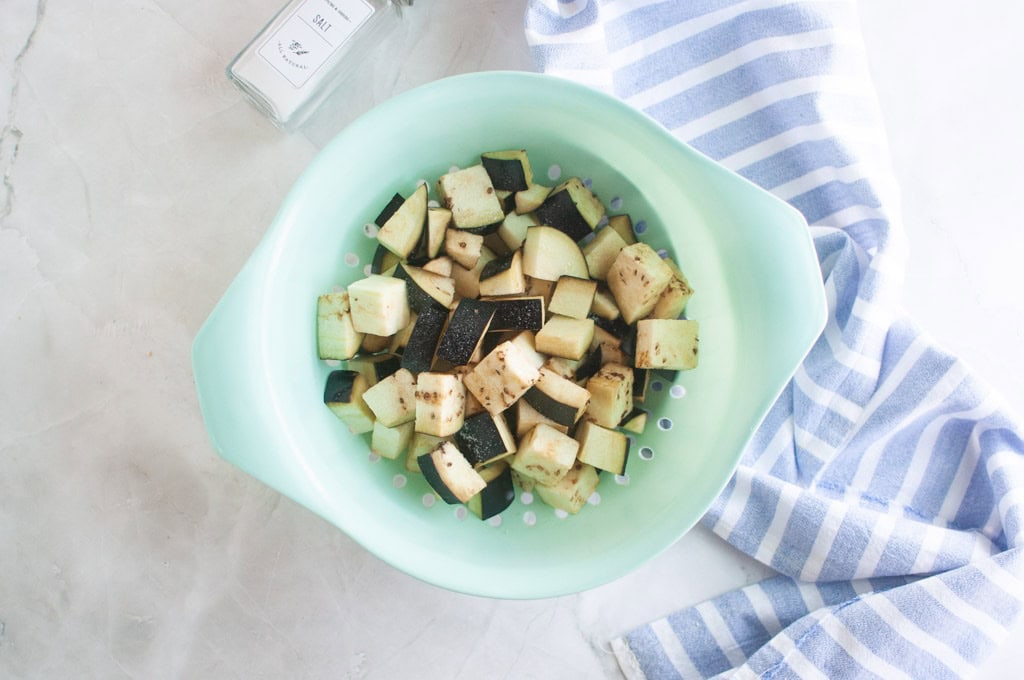
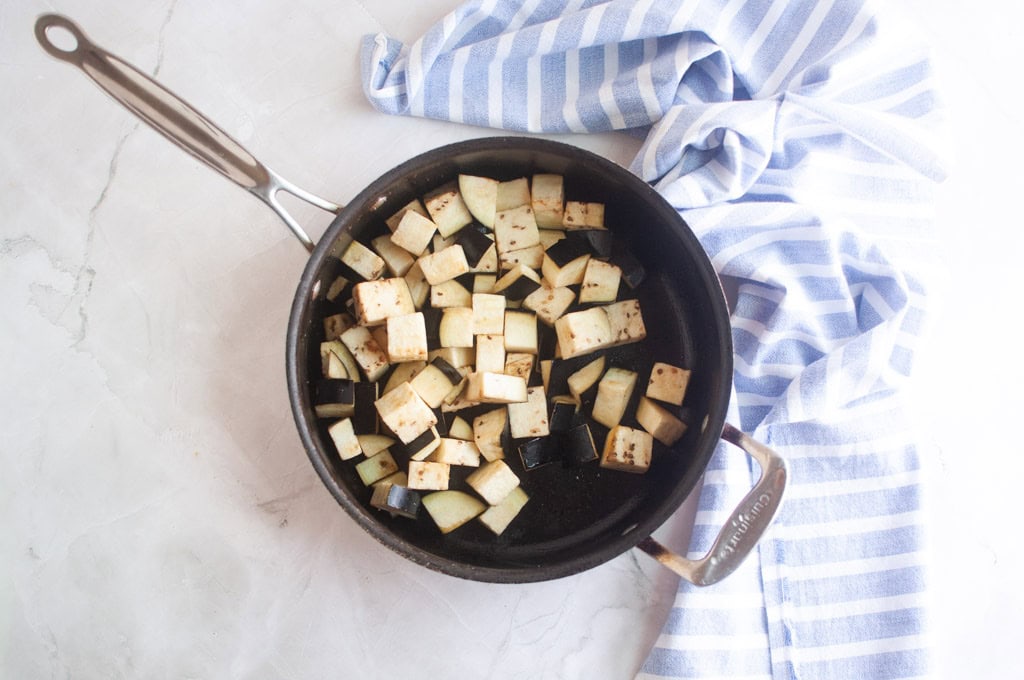
Heat olive oil in a large skillet over medium heat. Add the eggplant and cook until golden and tender, about 8 to 10 minutes. Remove the eggplant and set it aside.
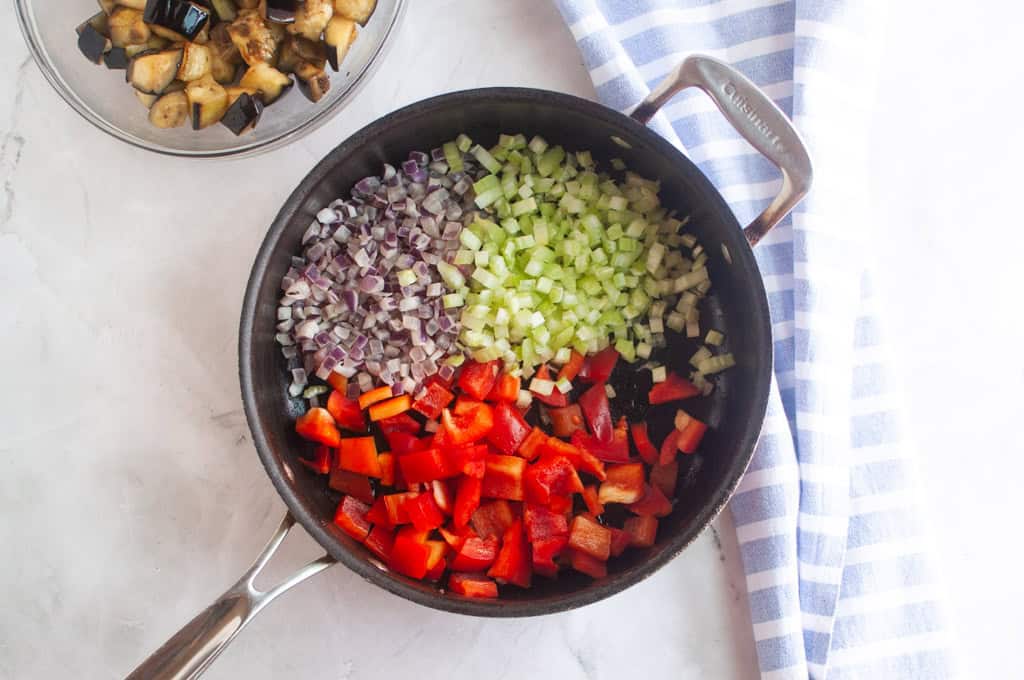
In the same skillet, sauté the onion, celery, and red bell pepper until softened, about 5 minutes. I like using a wooden spoon to stir because it won’t scratch the skillet and helps lift all those caramelized bits.
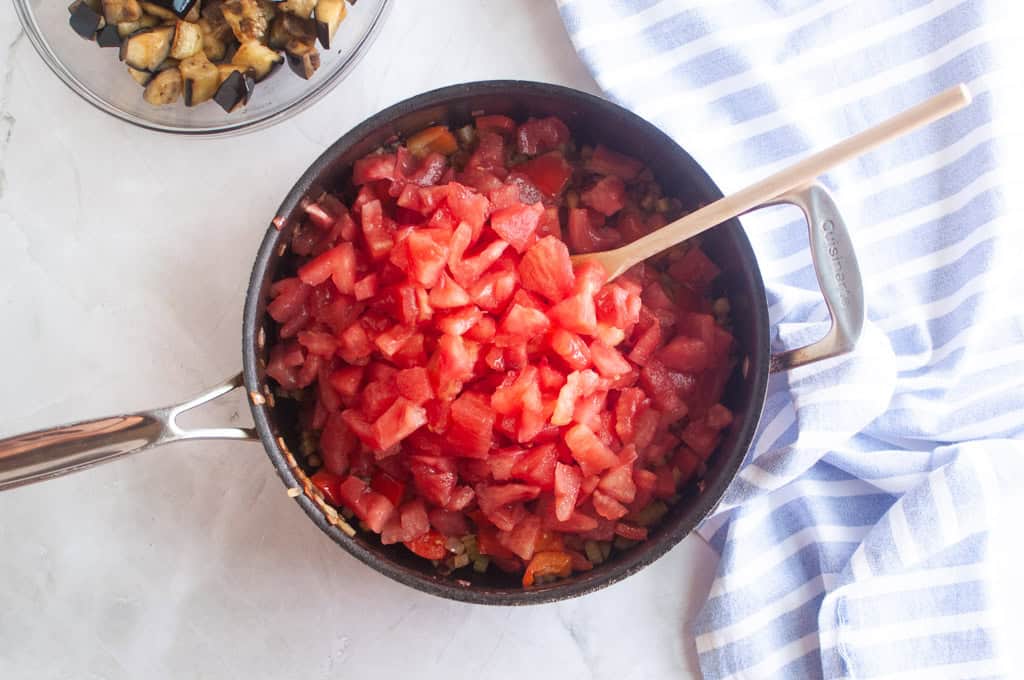
Add the garlic and cook for 1 minute until fragrant. Then stir in the chopped fresh tomatoes and cook until they break down and release their juices, about 8 to 10 minutes.
Mix in the capers, olives, red wine vinegar, and sugar. Let it simmer for 5 more minutes.
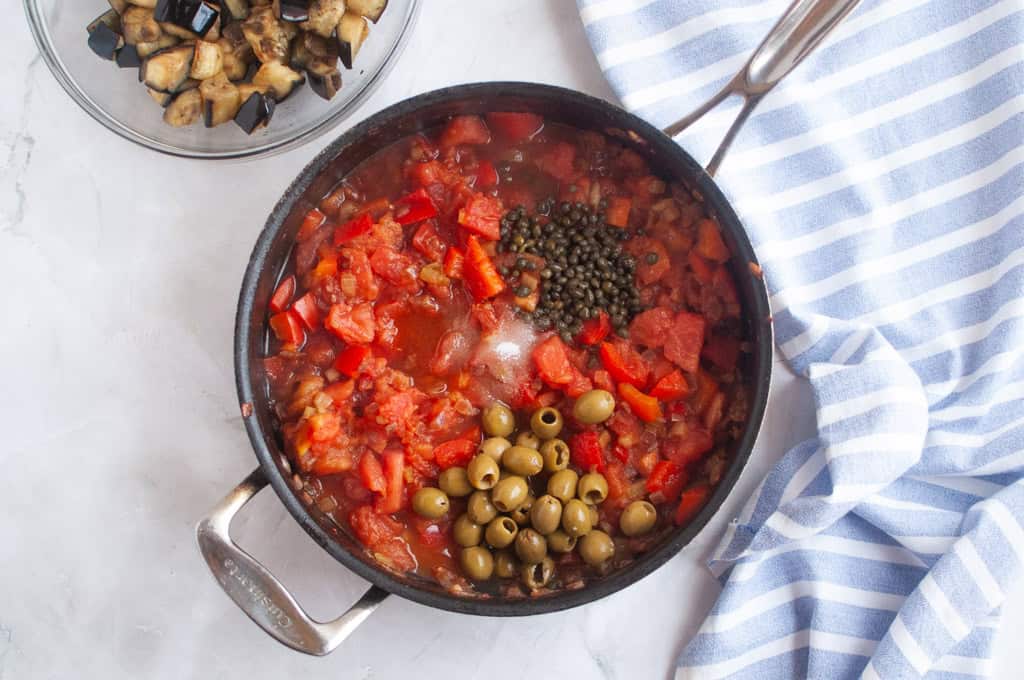
Return the eggplant to the skillet and stir gently. Cook for another 10 minutes so all the flavors meld beautifully.
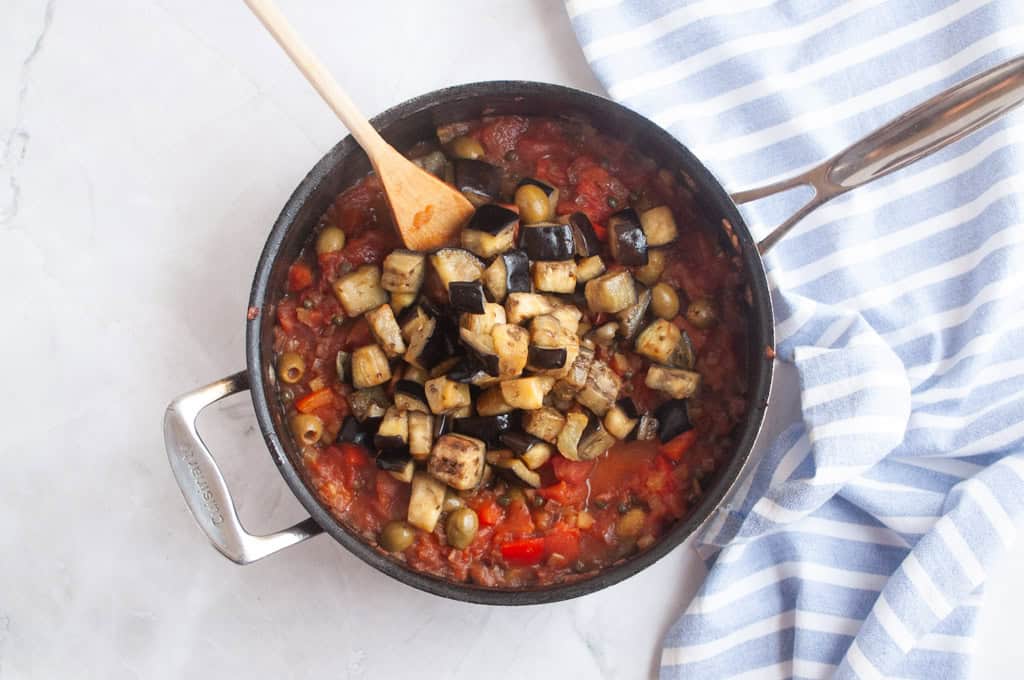
Season with salt and pepper to taste. I like using a small silicone spatula for stirring so I can scrape the sides and get every bit of sauce.
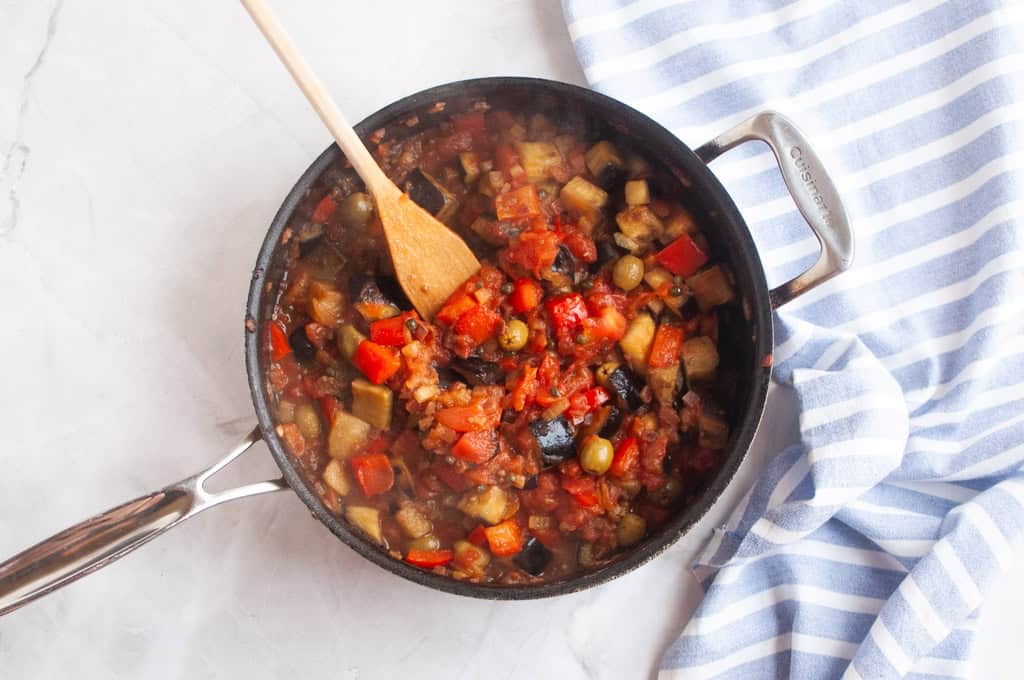
Cool the caponata to room temperature. Serve warm, at room temperature, or chilled. Garnish with fresh basil or parsley for a bright, fresh finish.

Chef Jenn’s Tips
- Salting the eggplant before cooking is important—it helps keep it from getting soggy and improves the texture.
- Make sure to use ripe tomatoes for the best fresh taste. If they’re very juicy, let them cook a little longer to thicken the sauce.
- Let the caponata sit for a few hours (or overnight!) to bring out even more flavor.
- For a richer, sweeter taste, add a splash of balsamic vinegar.
Make It A Meal
Caponata is very versatile—it’s great with grilled chicken or fish, spread on crostini, or mixed with pasta. It’s also a fantastic addition to a charcuterie or antipasto board.

Storage
Keep leftover caponata in an airtight container in the fridge for up to 5 days. It actually tastes better after sitting overnight! You can also freeze it for up to 1 month—just thaw it and serve at room temperature.

Classic Caponata
Ingredients
- 1 eggplant diced
- 1 teaspoon salt
- ¼ cup olive oil
- 1 cup red onion diced
- 2 celery stalks diced
- 1 red bell pepper chopped
- 2 garlic cloves minced
- 4 large ripe tomatoes peeled, seeded, and chopped
- 2 tablespoons capers drained
- ⅓ cup pitted green olives drained and chopped
- 2 tablespoons red wine vinegar
- 2 teaspoons sugar
- Salt and freshly ground black pepper
- Fresh basil or parsley
Instructions
- Sprinkle the diced eggplant with salt and let it sit in a colander for 30 minutes to draw out the moisture. Rinse quickly to remove any extra salt and then pat it dry with a clean kitchen towel or paper towel. Blot as much liquid as you can.
- Heat olive oil in a large skillet over medium heat.
- Add the eggplant and cook until it’s golden and tender, about 8–10 minutes. Remove it and set aside.
- Sauté the onion, celery, and red bell pepper in the same skillet until softened, about 5 minutes.
- Add the garlic and cook for 1 minute until fragrant.
- Stir in the chopped fresh tomatoes and cook until they break down and release their juices, about 8–10 minutes.
- Add the capers, olives, red wine vinegar, and sugar. Let it simmer for 5 more minutes.
- Return the eggplant to the skillet and stir gently, cooking for another 10 minutes.
- Season with salt and pepper to taste.
- Cool the caponata to room temperature. Serve warm, at room temperature, or chilled, topped with fresh basil or parsley.
Video
Notes
Chef Jenn’s Tips
- Salting the eggplant before cooking is important—it helps keep it from getting soggy and improves the texture.
- Make sure to use ripe tomatoes for the best fresh taste. If they’re very juicy, let them cook a little longer to thicken the sauce.
- Let the caponata sit for a few hours (or overnight!) to bring out even more flavor.
- For a richer, sweeter taste, add a splash of balsamic vinegar.
Nutrition
A Note on Nutritional Information
Nutritional information for this recipe is provided as a courtesy and is calculated based on available online ingredient information. It is only an approximate value. The accuracy of the nutritional information for any recipe on this site cannot be guaranteed.