Horiatiki Salad
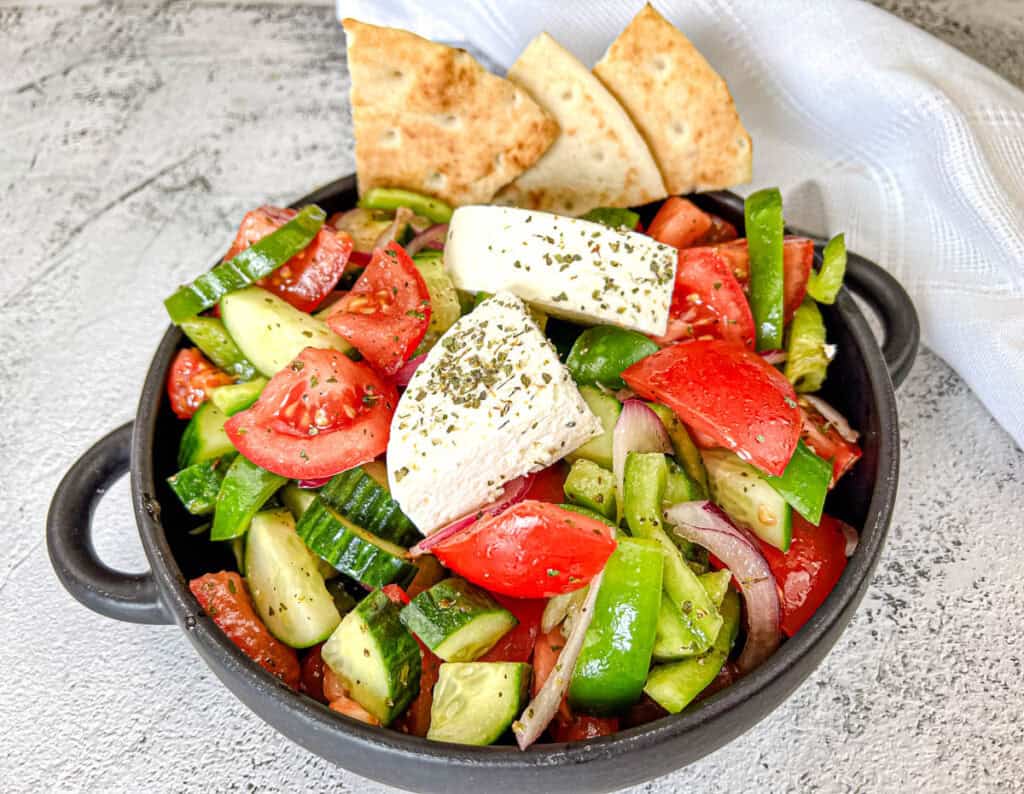
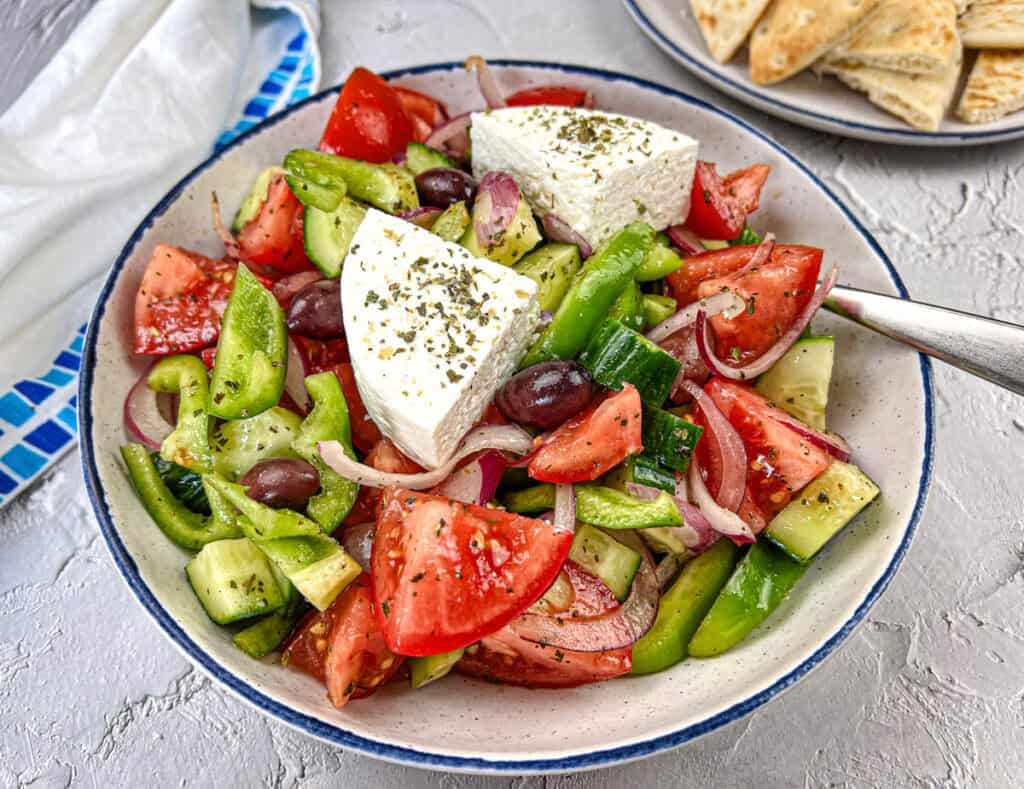
I absolutely adore this salad for its freshness, tanginess, crunchiness, and vibrant colors. It shines especially with in-season local tomatoes, yet it’s a delight year-round. Horiatiki Salad is wonderfully simple to prepare with zero cooking required. I prefer to assemble it about 20 minutes before serving to let the flavors meld beautifully.
This post may contain affiliate link(s). As an Amazon Associate, I earn from qualifying purchases. See Disclosures.
This effortless Greek salad isn’t just easy to prepare; it’s also brimming with nutrients. I find it perfect as a dinner side, though it’s equally satisfying as a standalone lunch. Its adaptability also allows for additions according to personal taste while maintaining its classic simplicity. When presented in a large bowl, this salad invites everyone to enjoy its elegant and delicious flavors.

You'll get ad-free recipes like:
Spaghetti Casserole,
Sloppy Joe Casserole,
Cowboy Casserole,
and more!

31 of Chef Jenn's FAVE Casseroles
I've gathered 31 of my favorite casseroles for you and your family to love, all in a convenient ebook with no ads and no AI! Each of these scratch-made dishes is created, tested, and loved by Chef Jenn. Get your instant download now!
This is a digital product. You'll receive an instant download link after purchase.
History
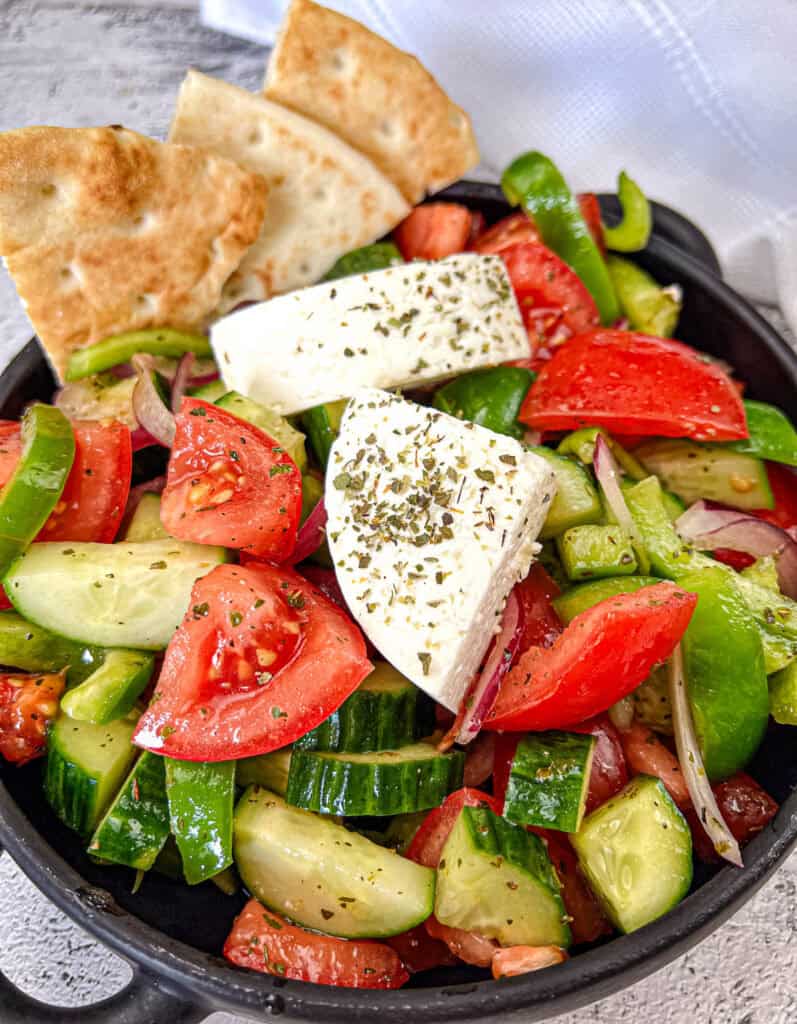
Horiatiki salad, also known as Greek village salad, has roots deeply embedded in Greece’s agricultural traditions. Traditionally, this salad was a staple meal for Greek farmers, who would use fresh, locally sourced ingredients readily available in their villages.
It began gaining mainstream popularity outside of Greece in the 1960s and 1970s. This period saw a global rise in interest in Mediterranean cuisine, driven by increased travel, the burgeoning health food movement, and a growing appreciation for the fresh, simple ingredients characteristic of Mediterranean diets. Greek restaurants and diners began appearing more frequently in Europe and North America, bringing with them traditional dishes like Horiatiki Salad. Its appeal was further boosted by the promotion of the Mediterranean diet, known for its health benefits and reliance on fresh vegetables, olive oil, and lean proteins.
Ingredients
- Ripe tomatoes – Any ripe tomato will work. I love campari tomatoes, but grape tomatoes, Roma or your favorite salad tomato will work.
- English cucumber – I love using English cucumbers because you can eat the skin and there are no tough seeds to worry about.
- Green bell pepper – Remove the seeds and chop it up into chunks or slices; whatever floats your boat.
- Red onion – Slice it thin, and if you really want to remove the oniony bite, soak the onion slices in ice water for 10 minutes then drain and add to the salad.
- Kalamata olives – Be smart and use already pitted olives!
- Feta cheese – Planks, crumbles, or cubes. Sometimes I just use crumbled feta because I’m lazy and that’s what I have on hand, but authentic Greek Salad is made with a hunk of feta.
- Extra virgin olive oil – Use the good stuff!
- Red wine vinegar – You really do need red wine vinegar for this recipe; nothing else tastes quite the same.
- Oregano – Dried oregano is fine. Does anyone even have fresh oregano? I sure can’t get it.
- Salt and pepper – Season to taste.
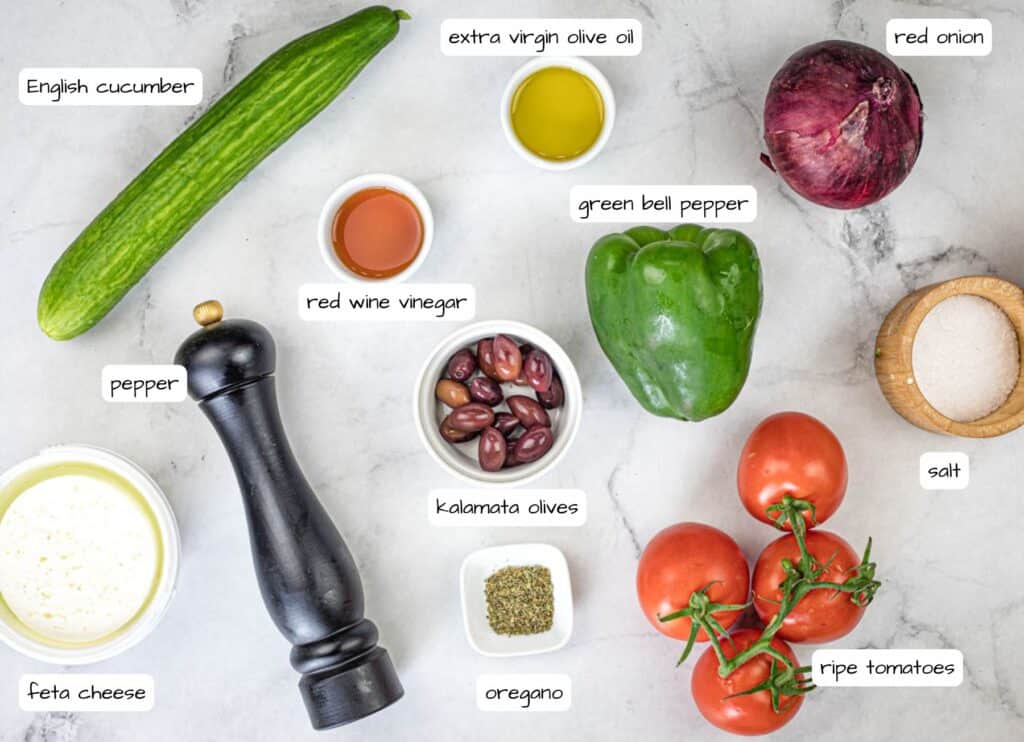
How To Make Horiatiki Salad
Scroll down for the full recipe card with exact measurements and printable instructions.
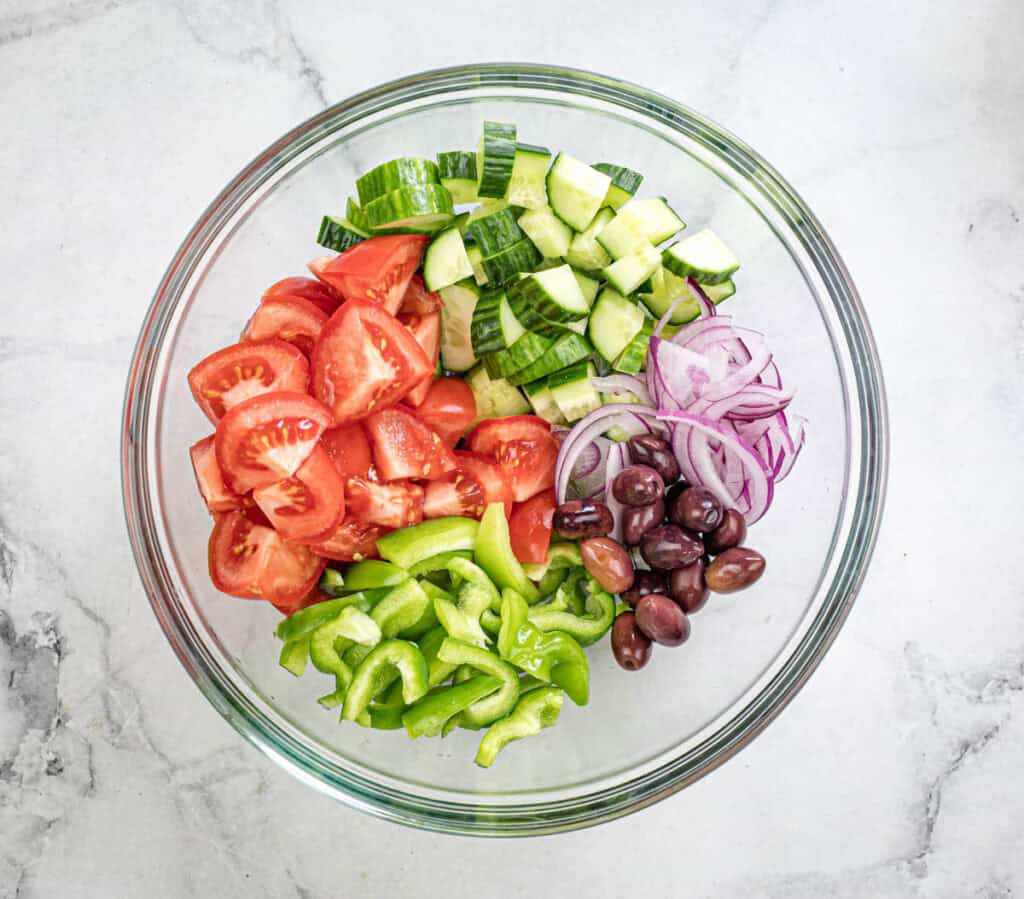
Start by chopping the tomatoes, slicing the cucumber and green bell pepper, and thinly slicing the red onion. I like using a sharp santoku knife because it makes clean cuts and keeps the vegetables crisp and beautiful.
Add the chopped tomatoes, cucumber, bell pepper, red onion, and Kalamata olives to a large salad bowl. Gently mix them together with salad hands so the vegetables stay intact and colorful.
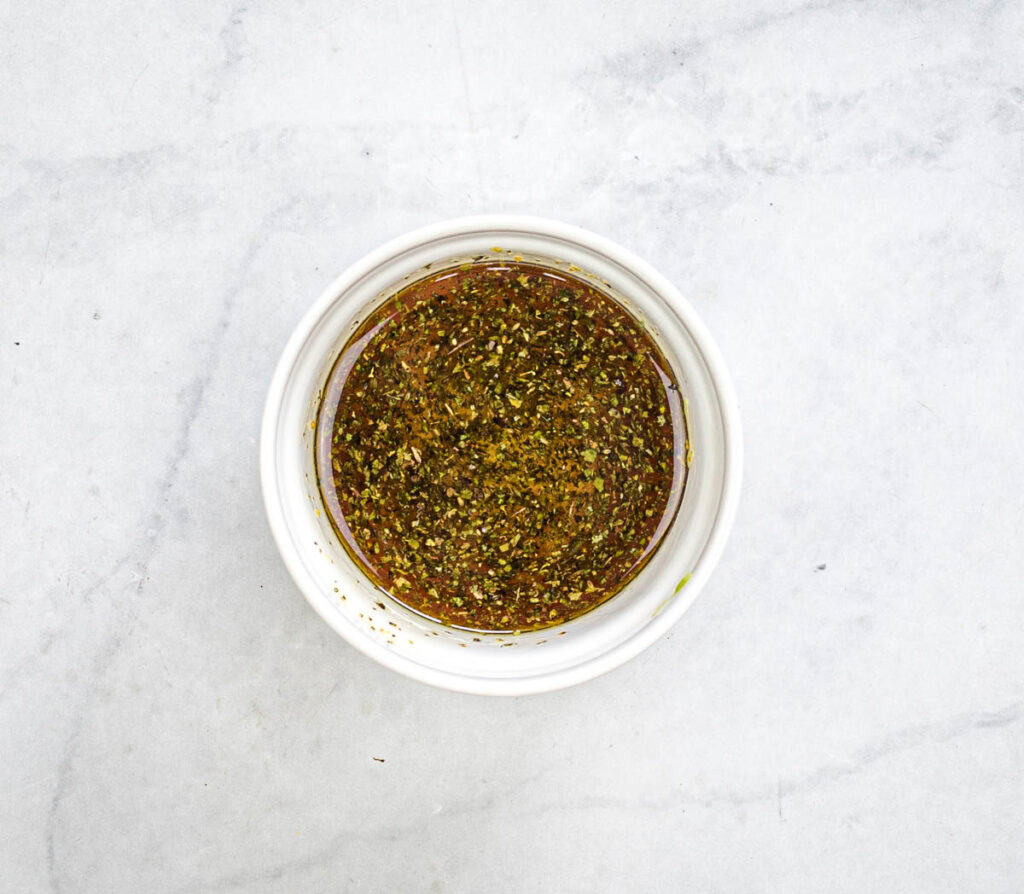
Whisk together the olive oil, red wine vinegar, and oregano in a small bowl. I love using a mini emulsifying whisk because it combines everything smoothly and gives the dressing a silky texture. Drizzle it over the vegetables and toss until all the flavors are evenly coated.
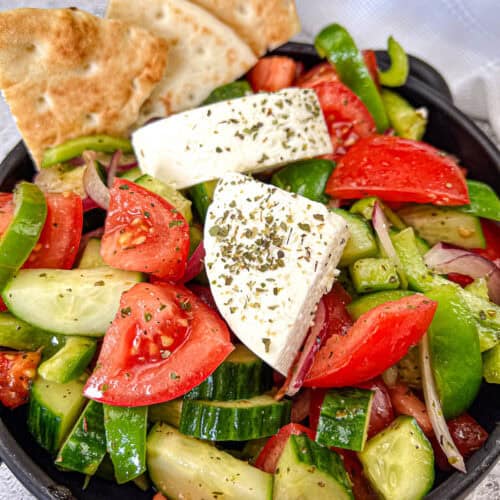
Now for the fun part: arrange the feta cheese over the salad, either in planks, crumbles, or cubes. Using a cheese harp or wire cutter keeps the pieces neat and pretty. Sprinkle a little extra oregano on top to make it fragrant and flavorful.
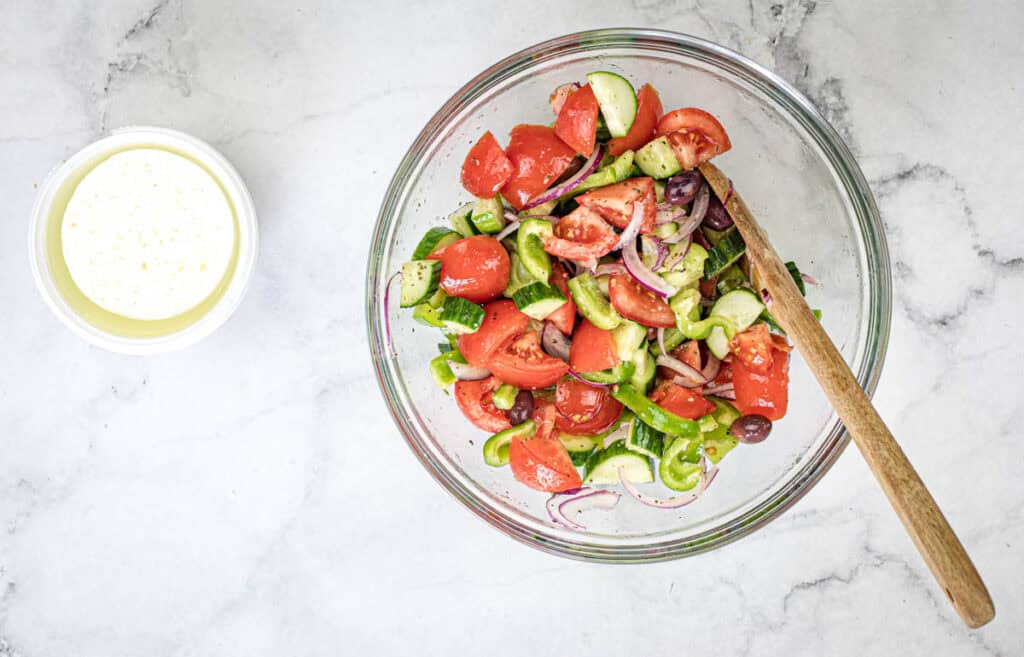
Transfer the salad to a serving bowl and present it immediately so you can enjoy the freshest taste and crispest texture.
Chef Jenn’s Tips
- Opt for high-quality ingredients like vine-ripened or heirloom tomatoes, top-notch olives, and fruity olive oil.
- Traditionally, this salad features large slabs of feta cheese rather than crumbles to avoid a milky appearance. You can also try using goat or cow’s milk feta.
- Accompany the salad with wedges of pita bread to absorb the delicious juices at the bottom.
Make It A Meal
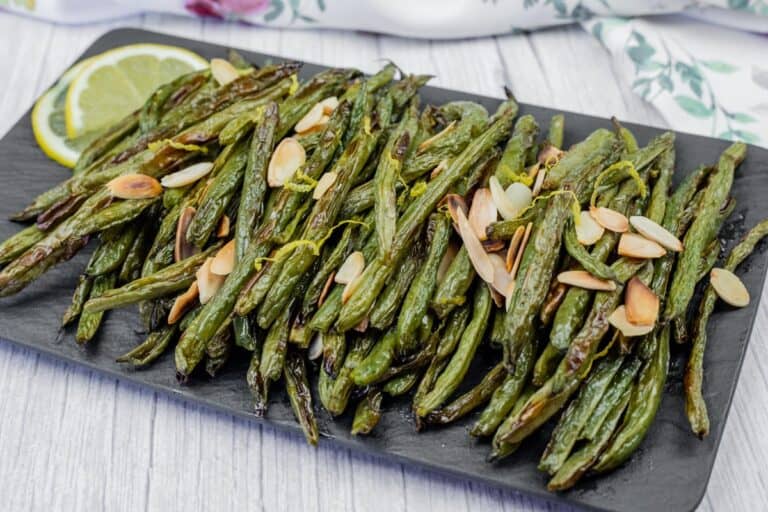
Horiatiki Salad pairs exceptionally well with grilled dishes, such as Pork Souvlaki, making it a perfect addition to any barbecue or picnic, and don’t forget the Greek Green Beans! For a lighter fare, serve it alongside warm pita bread and some tzatziki for a delightful meal.
Storage
Store any leftovers in an airtight container in the refrigerator for up to two days. While the salad is ideally enjoyed fresh, it remains tasty the next day, although the vegetables may release additional juices, resulting in a slightly soggier texture. Freezing this salad is not recommended due to the high water content in the fresh ingredients.
Horiatiki Salad
Ingredients
- 2 ripe tomatoes chopped
- ½ English cucumber sliced
- ½ green bell pepper sliced
- ½ cup red onion sliced
- ½ cup Kalamata olives
- 4 – 6 ounces feta cheese planks, crumbles or cubes
- 2 tablespoons extra virgin olive oil
- 1 tablespoon red wine vinegar
- 2 teaspoons oregano
- salt and pepper to taste
Instructions
- Chop the tomatoes, slice the cucumber and green bell pepper, and thinly slice the red onion.
- Combine the chopped tomatoes, sliced cucumber, bell pepper, red onion, and Kalamata olives in a large salad bowl.
- Whisk together the olive oil, red wine vinegar, and oregano in a small bowl. Drizzle this over the vegetables and toss everything together to coat well.
- Arrange the feta cheese atop the salad, either in planks, crumbles, or cubes. Sprinkle a bit more oregano over the feta for added flavor.
- Transfer the salad to a serving bowl and present it to your guests.
Video
Notes
Chef Jenn’s Tips
- For such a straightforward recipe, opt for high-quality ingredients like vine-ripened or heirloom tomatoes, top-notch olives, and fruity olive oil.
- Traditionally, this salad features large slabs of feta cheese rather than crumbles to avoid a milky appearance. You can also try using goat or cow’s milk feta.
- Accompany the salad with wedges of pita bread to absorb the delicious juices at the bottom.
Nutrition
A Note on Nutritional Information
Nutritional information for this recipe is provided as a courtesy and is calculated based on available online ingredient information. It is only an approximate value. The accuracy of the nutritional information for any recipe on this site cannot be guaranteed.